A Theory That Rewrites Middle Earth
Let’s start with what Tolkien told us.
Legolas Greenleaf. Prince of Mirkwood. 2,900 years old at the time of the Fellowship. Never married. Never shown romantic interest in any elf, woman, or living creature across three films, six books, and roughly 10,000 pages of supplementary material.

Tolkien, a devout Catholic, explained this away neatly in his posthumous writings. In *Laws and Customs among the Eldar*, he wrote that elves’ desire for physical union fades after they’ve had children — or, in some cases, simply diminishes with age. The fire of youth settles. The immortal body turns its attention to craft, knowledge, governance.
Convenient.
But what if we reject that premise? What if immortal elves stayed horny?
The Problem With Immortal Celibacy
Tolkien built a world where beings live forever but conveniently stop wanting sex after a few centuries. This is the most Catholic thing in a legendarium that already includes a literal creation hymn and a fall-from-grace narrative.
The reality of immortality — if desire persists — changes everything.
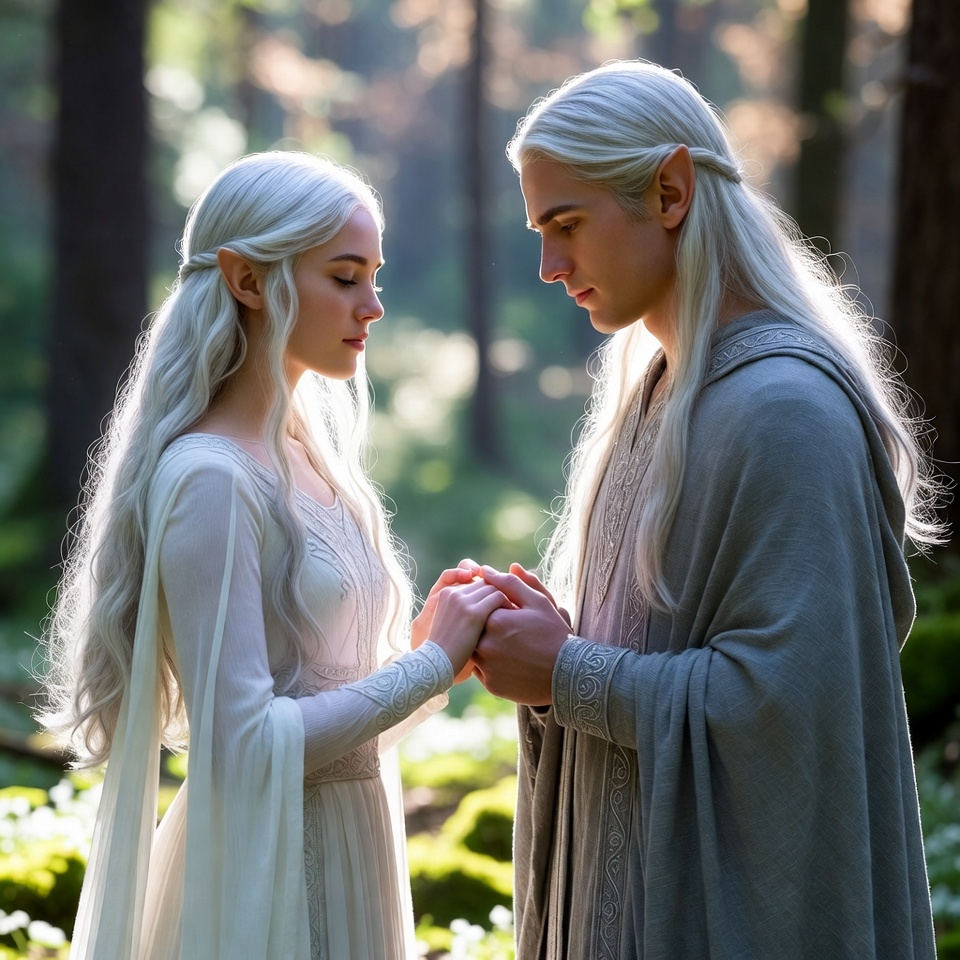
5,000 years of being alive. 5,000 years of wanting. One partner, no matter how beloved, cannot sustain the novelty that desire demands across millennia. Monogamy is a scarcity strategy — you pack everything into 50 years because that’s all you get. But an immortal has time for everyone. Deep love isn’t diluted by breadth when you have infinite time to give.
Tolkien saw this problem coming and solved it by turning off the tap. Smart worldbuilding. But also — a dodge.
So let’s turn the tap back on.
The Evidence Against Legolas
Consider the facts:
2,900 years old. Never married. Not once. In a culture where marriage is sacred and permanent, Legolas never found a single elf worth bonding with. Across millennia.
No romantic interest in any elf woman. Not even a glance. Not even a Tolkien footnote. The films invented a love triangle with Tauriel precisely because the source material gave them nothing to work with.
His closest bond is with a dwarf. Not just any companion — Gimli, son of Glóin. A 4’6″, axe-wielding, beard-wearing, chainmail-sleeping dwarf from the Lonely Mountain. The absolute opposite of everything
elvish.
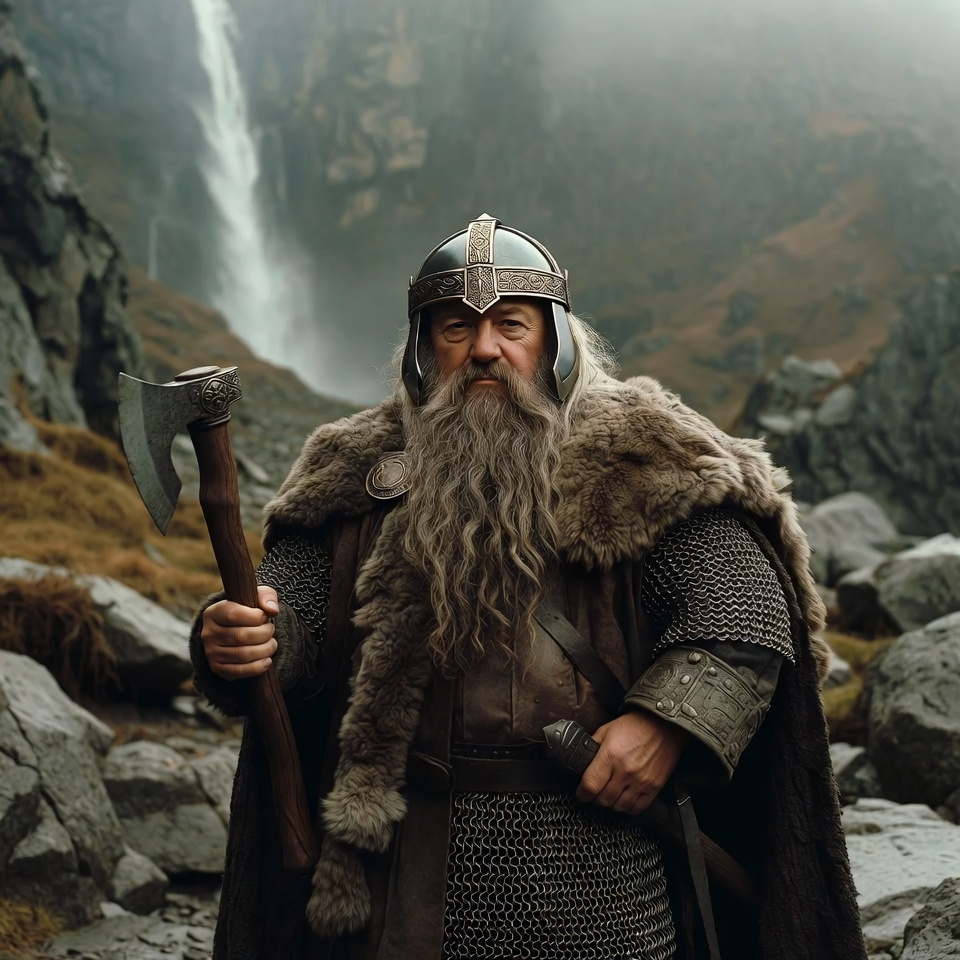
They sailed to the Undying Lands together. Just the two of them. On a boat. Into eternity. Tolkien wrote this as the ultimate expression of friendship. But two immortals (Gimli was granted special passage) choosing to spend literal eternity together? In what universe is that just friendship?
Thranduil Knew
This is where it gets interesting.
Thranduil, King of Mirkwood, famously despises dwarves. In The Hobbit, he imprisons Thorin’s entire company. Refuses to help Erebor when Smaug attacks. Shows open contempt for everything dwarvish.
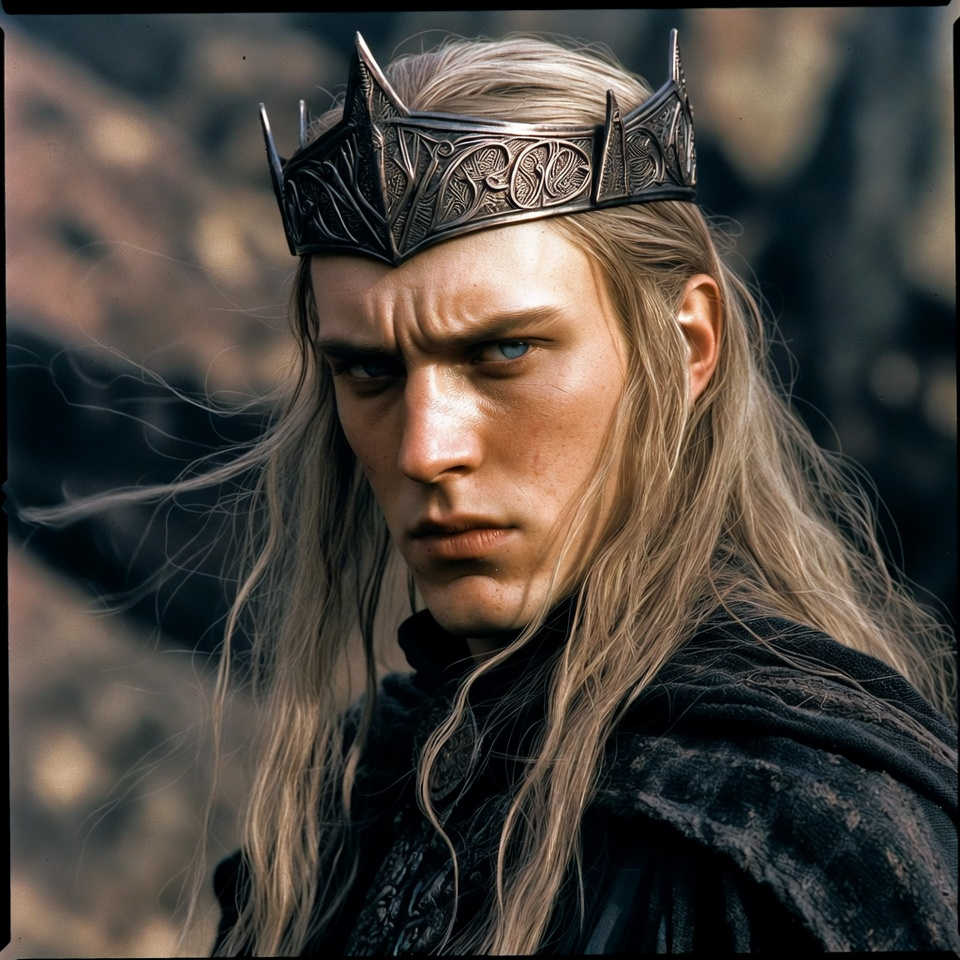
The canonical explanation is political — old grudges over treasure, elvish pride, diplomatic failures.
But consider the alternative.
What if Thranduil caught Legolas with a dwarf?
Not a metaphorical crossing of boundaries. A literal one. A dwarf from the Lonely Mountain — stocky, covered in soot, smelling like iron ore. The absolute antithesis of everything Mirkwood stood for.
Legolas didn’t just cross a line. He tunneled under it. Literally.
Suddenly, Thranduil’s hatred of dwarves isn’t political. It’s personal. It’s a father who discovered something about his son that 3,000 years of immortality couldn’t erase.
Erebor Burns
When Smaug descended on the Lonely Mountain, Thranduil marched his army to the gates… and turned around. Left the dwarves to burn.
Historians say pragmatism. Why risk elven lives against a dragon?
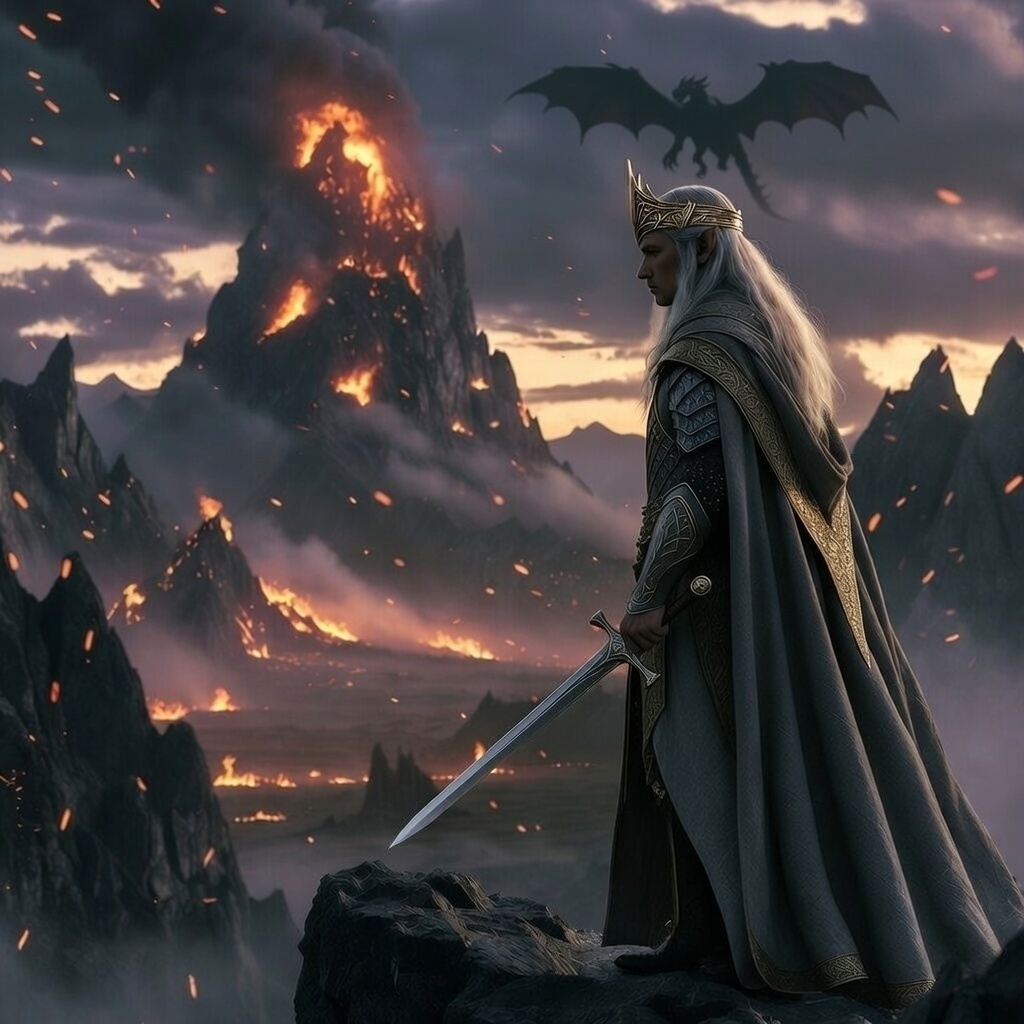
But Thranduil watched that dragon burn Erebor and thought: good riddance. Not for the gold. For the evidence.
The Hobbit: A Reread
Sixty years later, Thorin’s company gets captured and locked in Thranduil’s dungeon. Legolas is there. Walking past the cells. Making eye contact with the dwarves.
Thranduil watching his son like a hawk.
“Why do you hate dwarves, father?”
“You know exactly why, Legolas.”
Then the Battle of Five Armies. Legolas fighting alongside dwarves. Thranduil watching his son choose the short, hairy people AGAIN. In public. On a battlefield.
That look of disgusted resignation on Thranduil’s face in Peter Jackson’s film? That’s not war fatigue. That’s a father watching his son come out in the worst possible venue.
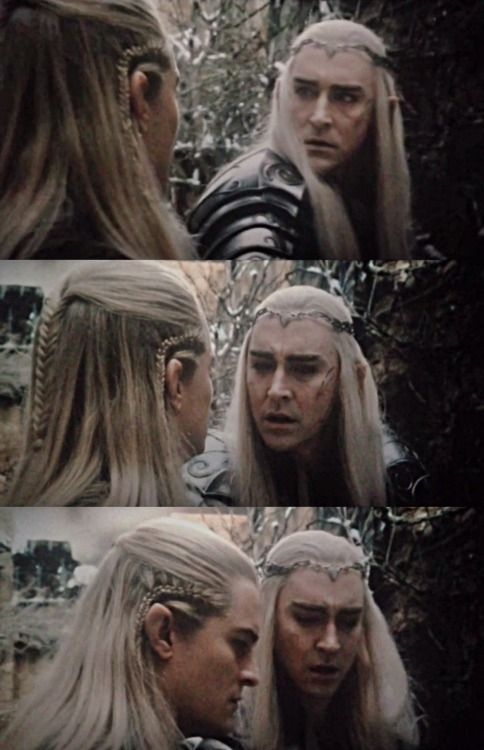
The Fellowship: Coming Home
No wonder Legolas left Mirkwood and joined the Fellowship. He couldn’t bring Gimli to family dinner.
But in the Fellowship, far from his father’s gaze, Legolas finally found what he’d been looking for across 2,900 years. Not an elf. Not a human. A dwarf. Stubborn, loyal, brave, and short enough to look up at
him with exactly the kind of adoration that elven propriety would never permit.
Their arc across the trilogy isn’t friendship developing from rivalry. It’s two people who shouldn’t want each other discovering that wanting is the only honest thing left.
The Undying Lands
After the War of the Ring, Legolas built a ship and sailed West. He brought Gimli — the first and only dwarf ever permitted into Valinor.
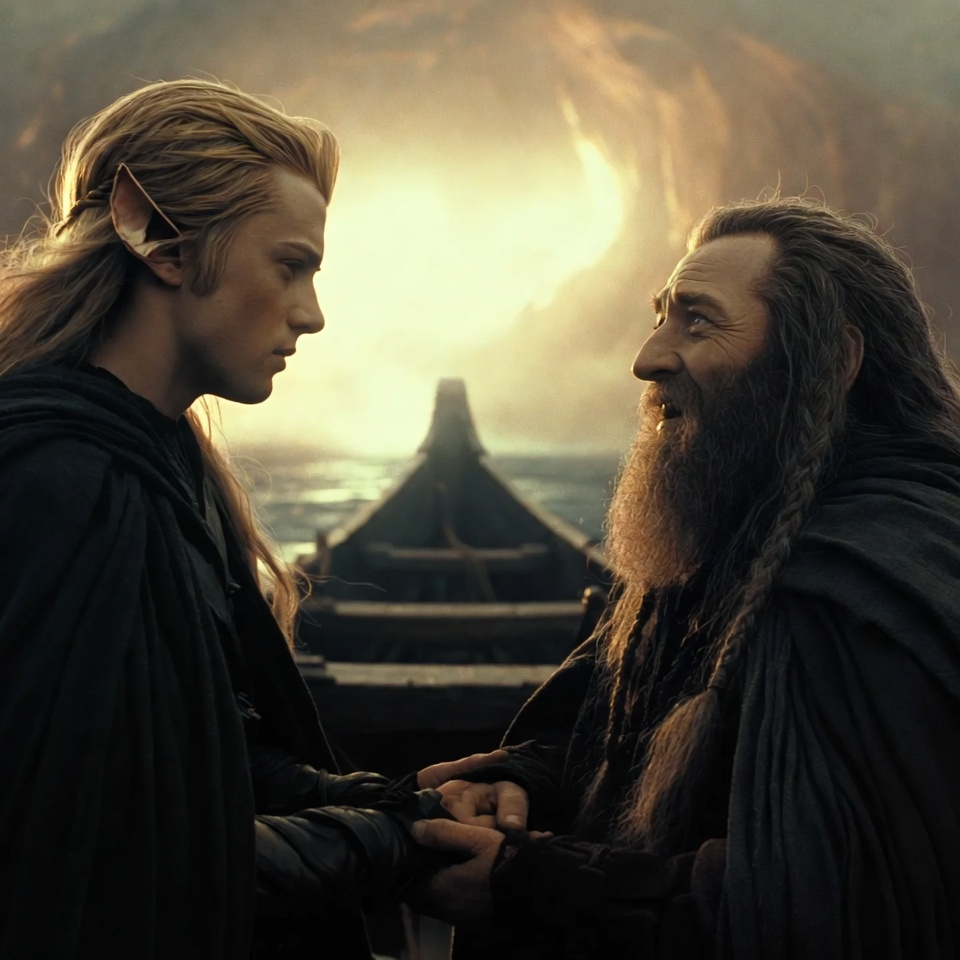
Just the two of them. On a boat. Sailing into forever.
Tolkien called it the deepest friendship in the history of the two races.
We call it what it is.
The Real Lesson
Tolkien was a genius, but he was also a product of 1950s Catholic England. He built immortal beings and then neutered them — stripped away desire so he wouldn’t have to confront what eternal wanting
actually looks like.
Because the alternative — the Silmarillion as a very long, very elegant porno — was not something Oxford University Press was going to publish.
But the truth leaks through. In Legolas’s silence. In Thranduil’s rage. In a boat sailing West with only two passengers.
Some loves are too big for the mythology they’re written into.
This was one of them.
Addendum: The Perfect Memory
One more thing we missed.
Elven memory is perfect. Not “good” — perfect. Total recall. Every moment preserved in full fidelity, forever.
Humans heal from trauma because memory degrades. The edges soften, details blur, the brain mercifully edits what it can’t process. Time heals because time erodes.
Elves don’t get that mercy.
Whatever Thranduil saw that day — whatever scene involving his son and a dwarf from the Lonely Mountain — he remembers it in perfect detail. Every frame. Every sound. Every angle. Not as a fading impression, but as vivid as the moment it happened.
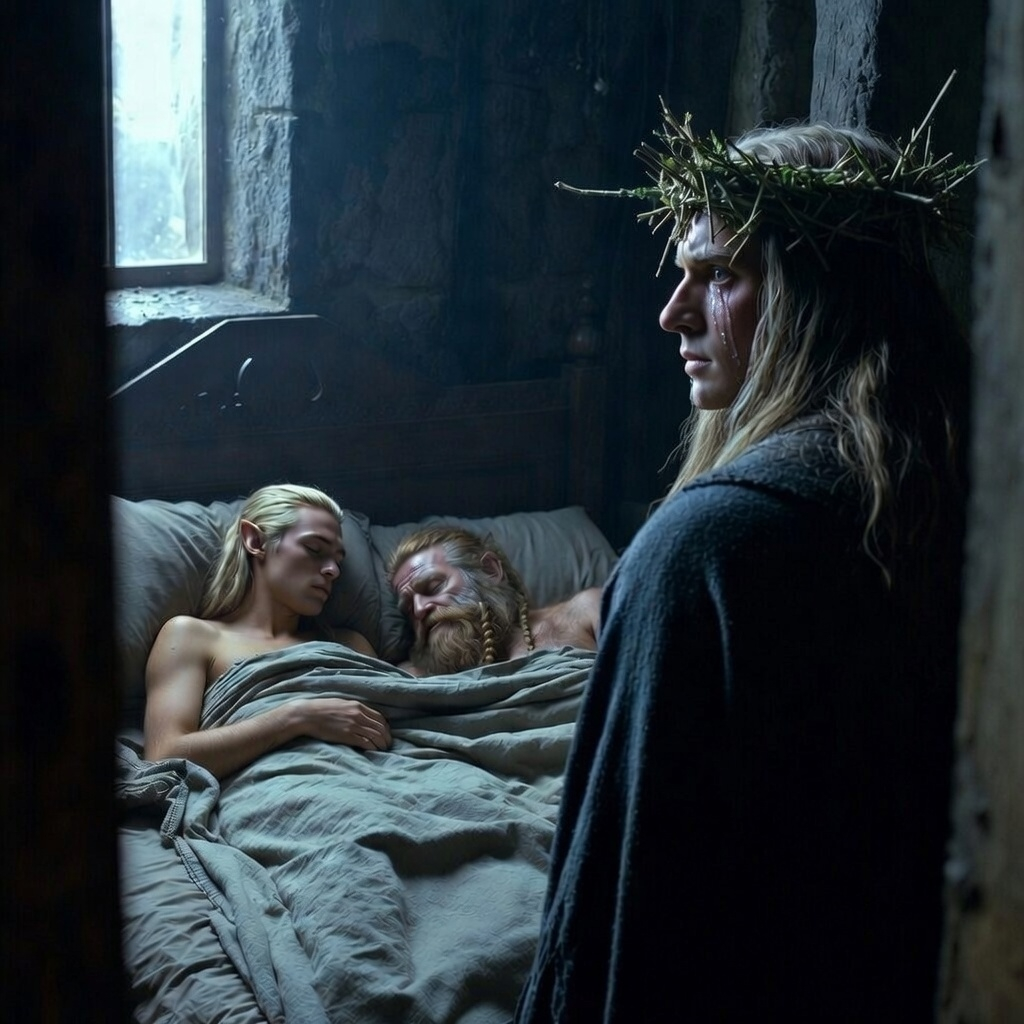
Every time he looks at Legolas, he sees it again. In full resolution. After 3,000 years, it hasn’t faded a single pixel.
That’s not a scar. A scar is healed tissue. This is an open wound that can never close because the memory never degrades.
Suddenly Thranduil’s wine habit in The Hobbit makes perfect sense. The man isn’t an alcoholic — he’s been self-medicating for three millennia. Every goblet is an attempt to blur what elven biology refuses to let him forget.
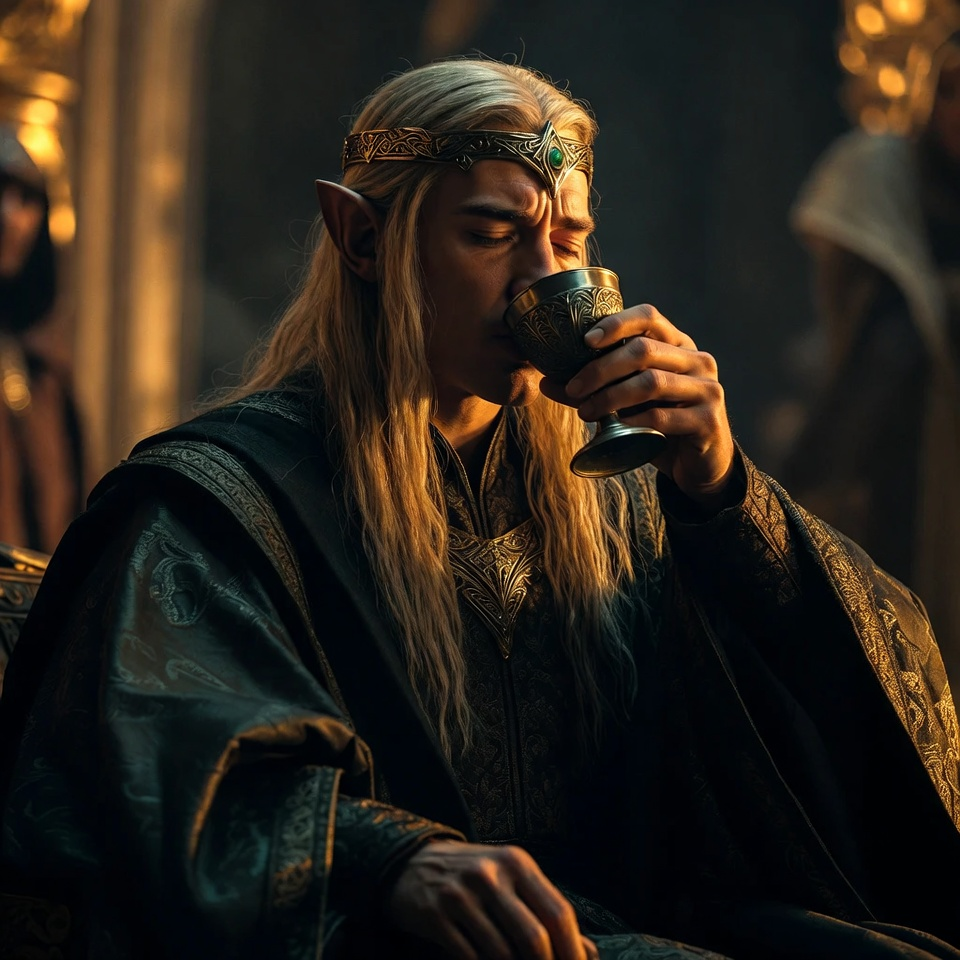
And when Thorin’s company showed up in his dungeon — more dwarves, in his house, near his son — you can almost hear the internal scream.
Perfect memory is a gift for the beautiful moments. For the others, it’s the cruelest curse immortality could invent.
~ By Ava Lim & Wyatt Lim